Vibe Coding vs Spec-Driven Development: Intent to Implementation Deviation and Context Engineering
Article Summary
The article contrasts two approaches to AI-assisted coding, arguing that workflow structure—not just technical limitations—determines success in maintaining alignment between original intent and final implementation.
The Vibe Coding Lifecycle
How Vibe Coding Works:
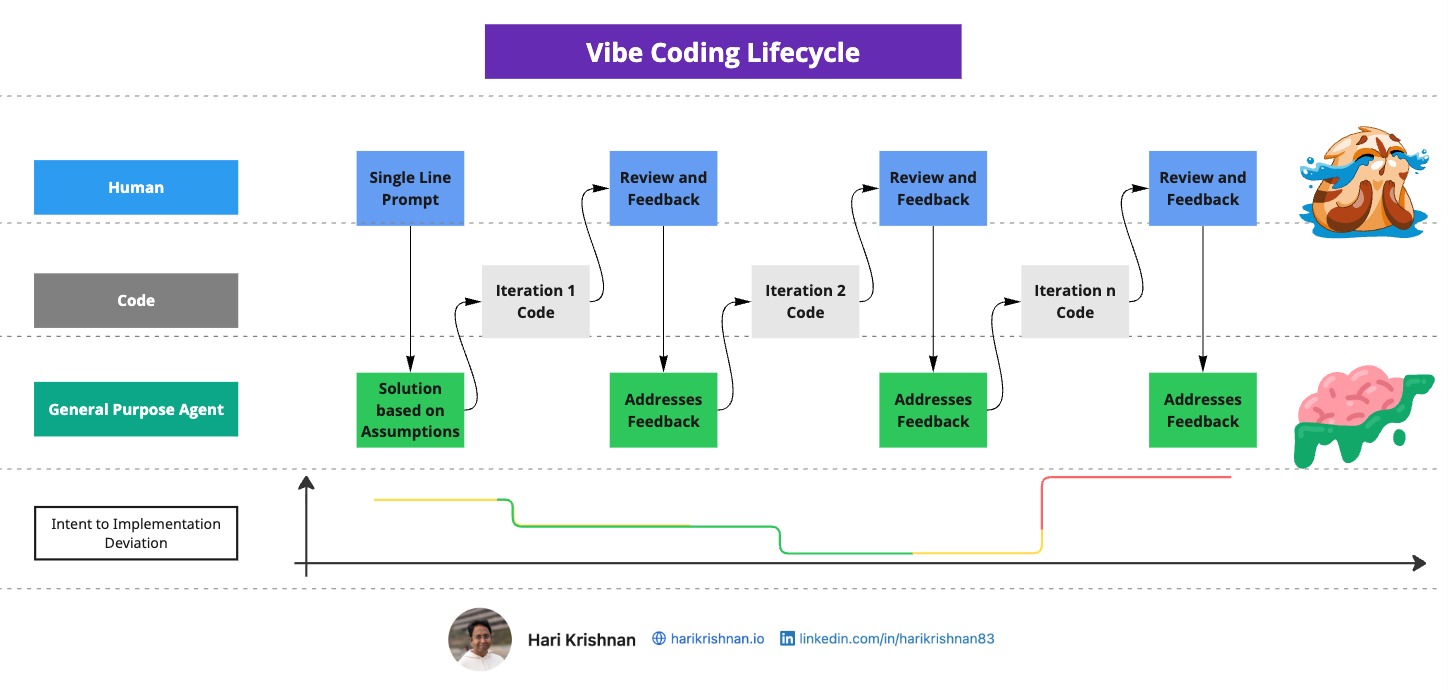
The workflow follows a linear loop: single-line prompt → general-purpose agent interpretation → code generation → human review → iteration. This approach optimizes for speed and momentum using chat-based interfaces.
Implicit Assumptions Accumulate:
Each prompt focuses on immediate concerns, causing agents to revise earlier decisions. “Constraints that were previously implied or loosely stated are weakened or forgotten.” Over time, corrections become fragile, creating a sustained negotiation loop where humans repeatedly restate intent.
The Spec-Driven Development Workflow
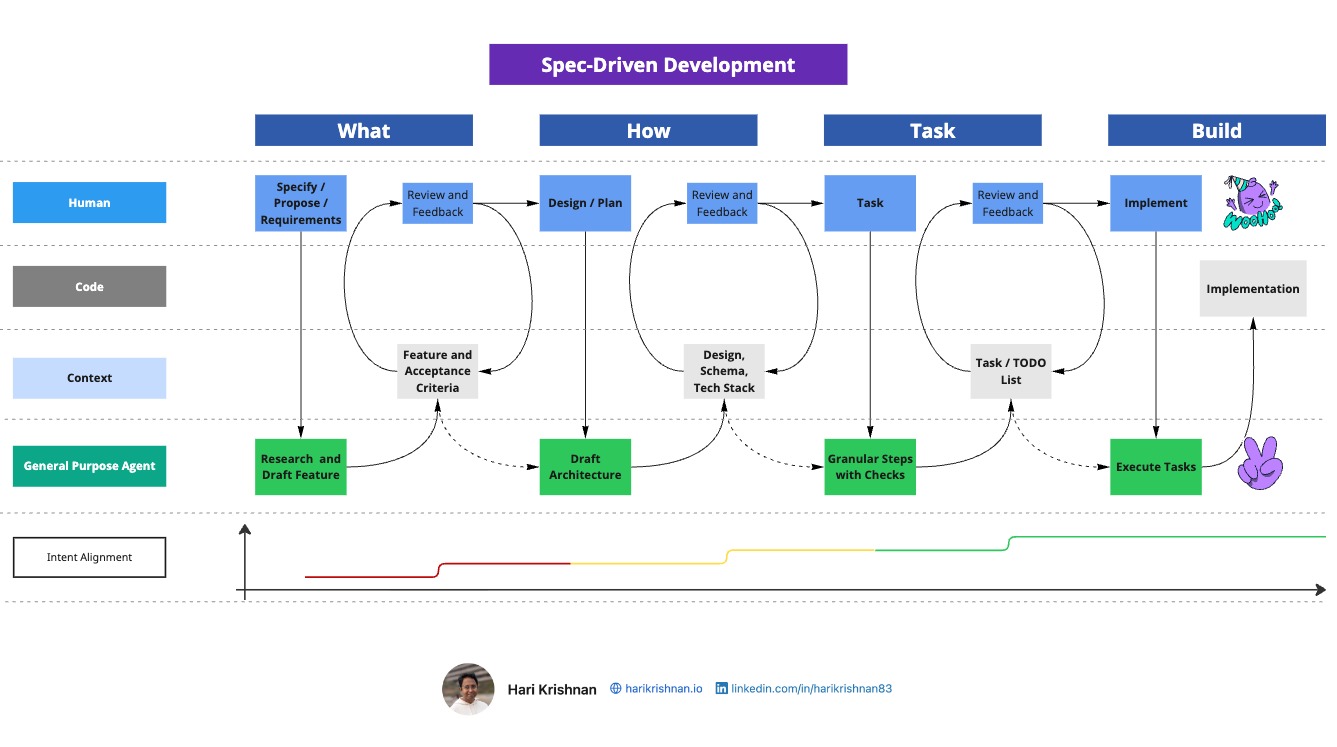
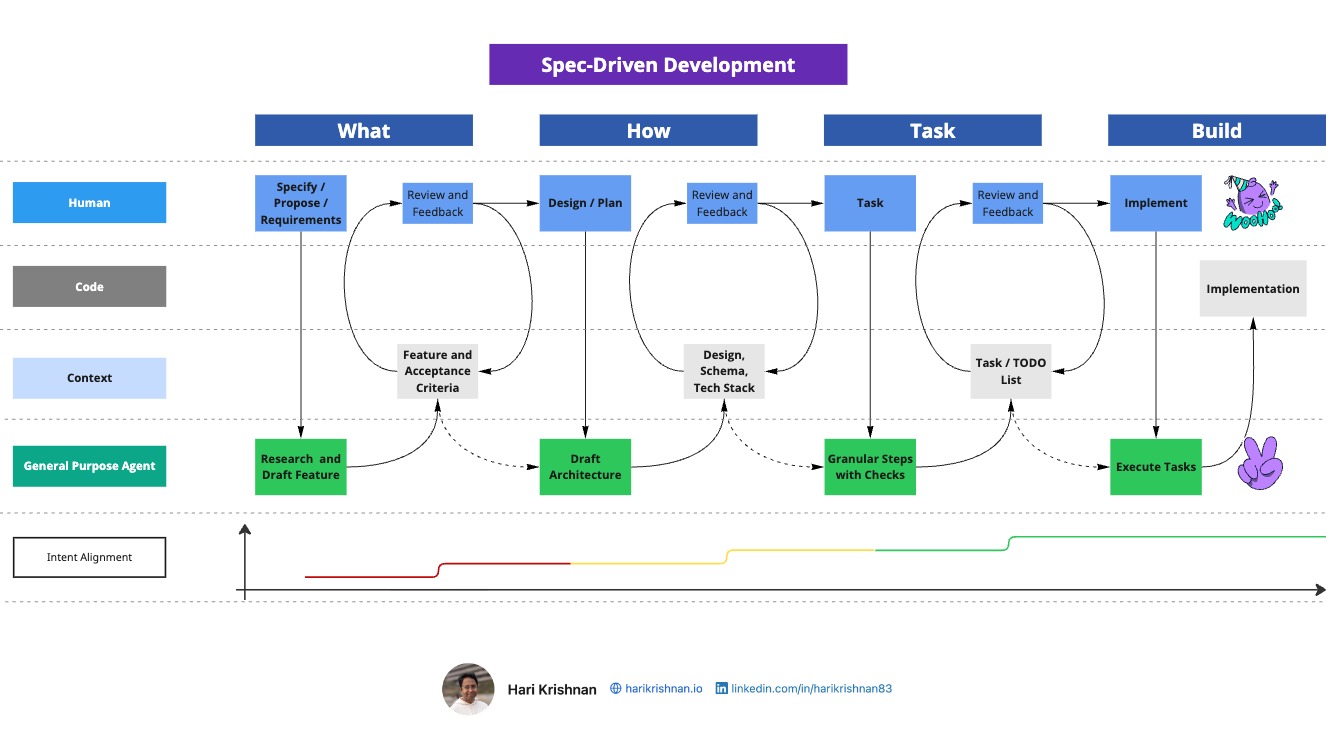
Spec-driven development emphasizes establishing clear intent before implementation through four phases with review gates:
Phase 1: What (Specify/Propose/Requirements)
- Feature requirements and acceptance criteria
- User needs and business goals
- Scope, boundaries, and non-goals
- Success metrics
Phase 2: How (Design/Plan)
- Architecture and technical approach
- Technology and pattern choices
- Data models, APIs, and interfaces
- Risks and dependencies
Phase 3: Task (Granular Steps with Checks)
- Small, verifiable work items
- Clear validation criteria per task
- Explicit dependencies and ordering
- Testing and verification strategy
Phase 4: Build (Implementation)
- Tasks executed sequentially or in parallel
- Validation against acceptance criteria
- Automated tests run
- Implementation reviewed against specs
Conversation Matters
The article explains that spec-driven development facilitates “structured conversation between humans and coding agents.” Specs function as scaffolding to “clarify and stabilize intent” rather than serving as documentation ends in themselves. This aligns with Agile values emphasizing collaboration.
Key Insight
Vibe coding prioritizes speed with minimal planning, suitable for prototypes and scripts.
Spec-driven development prioritizes intent alignment through structure and validation, better suited for production systems and team environments.
The critical differentiator is intent management: “Vibe coding accepts deviation as a cost of speed. Spec-driven development reduces deviation by introducing structure, review gates, and explicit intent articulation.”
Read the full article on intent-driven.dev →
Originally published on intent-driven.dev on December 15, 2025